
Repair or Replace a Damaged Panel?
A dented, cracked, or water-damaged garage door panel doesn't always mean a whole new door. Here's the honest, real-world framework Danny Kowalski uses to figure out which repair actually makes sense.
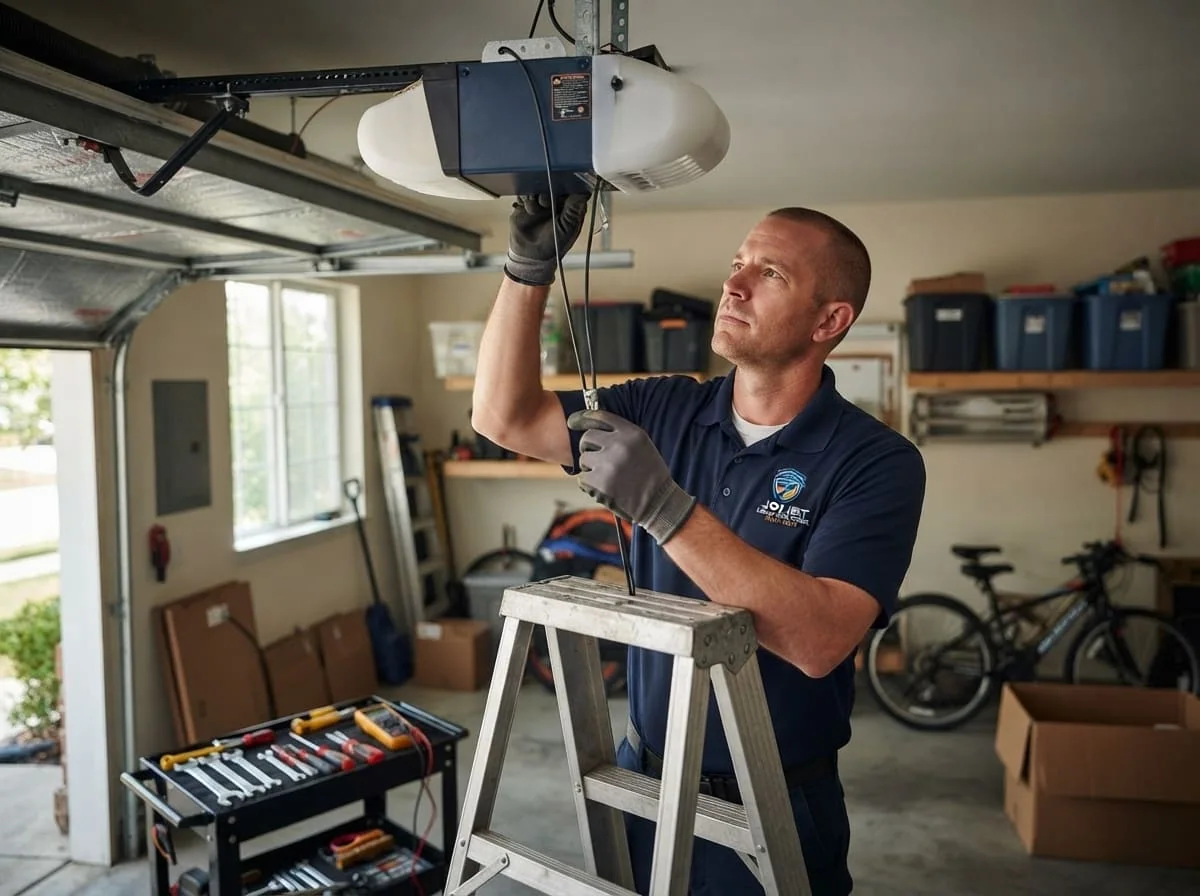
When a Dent Isn't Just a Dent
Around Joliet, panel damage tends to happen in a handful of predictable ways. A car bumper clips the bottom section backing out in a hurry. A wind-driven tree limb punches through during one of the spring storms that roll through Will County. A kid's baseball finds the one soft spot in an aluminum panel. Or, more quietly, years of splash-back from the driveway and sidewalk salt rust a bottom panel out from the inside, so the dent you notice today is really the last stage of damage that started years ago. Whatever the cause, the question homeowners ask us is almost always the same: do I need to replace just this one panel, or is it time to think about the whole door?
There's no single right answer, and anyone who tells you there is without looking at your door is guessing. What follows is the framework Danny Kowalski actually walks through on a service call, section by section, so you can have an informed conversation before a technician ever shows up — and so you know what questions to ask.
Cosmetic Damage vs. Structural Damage
The first thing that matters isn't how bad the dent looks. It's whether the damage is cosmetic or structural, and those two categories require very different answers.
Cosmetic damage is superficial: a shallow dent, a scuff, faded or peeling paint, a small ding that doesn't affect the panel's shape or the way it sits in the track. Cosmetic damage rarely affects how the door operates. It bothers the eye, not the mechanism.
Structural damage is different. It means the panel's shape has actually changed — it's bowed, creased, buckled, or punctured in a way that alters how it sits against the adjacent panels or inside the track. Structural damage can throw off the door's travel, put uneven stress on the hinges and rollers nearby, and in some cases affect how the springs and cables carry the door's weight. A cracked panel from an impact, a section that's visibly bent along its length, or a bottom panel that's rusted through and lost its rigidity all fall into this category.
Here's a simple test you can do before calling anyone: with the door closed, sight down the length of the damaged panel from the side. If it's flat and even with its neighbors, you're likely looking at cosmetic damage. If you can see a bow, a twist, or a gap where the panel no longer meets its neighbor evenly, that's structural, and it needs a hands-on look sooner rather than later.
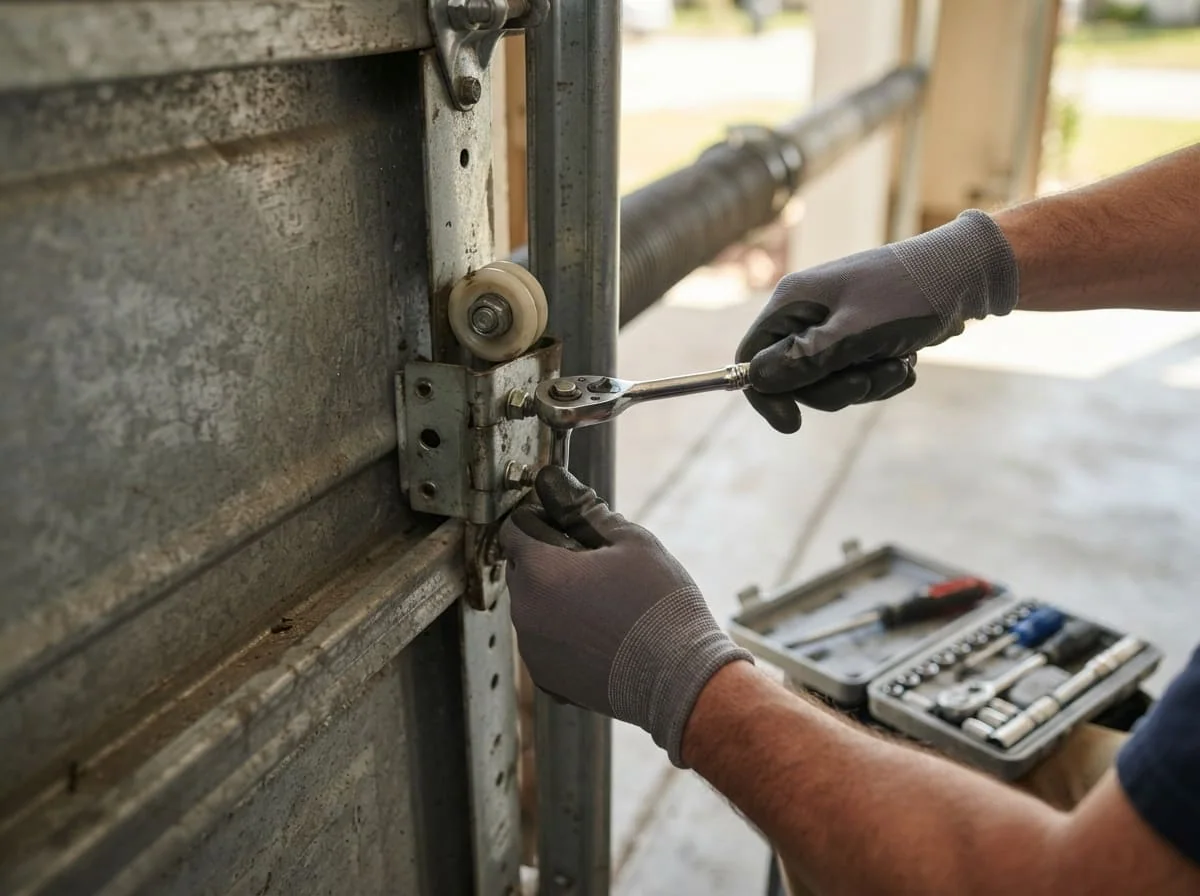
When Single-Panel Replacement Makes Sense
Single-panel replacement is often the right call, and it's usually the more economical path when the conditions line up. It tends to make sense when:
- The damage is limited to one section and hasn't spread stress to the hinges, rollers, or adjacent panels.
- The door is a common, relatively recent model where a matching panel is still manufactured or readily sourced.
- The rest of the door — springs, cables, tracks, opener — is in good working order with no separate issues.
- Color and texture matching is realistic, meaning the existing finish hasn't faded enough that a new panel would look noticeably different next to the old ones.
A single-panel swap on a well-maintained door that's a few years old is often a clean, contained repair. The technician removes the fasteners connecting the damaged section to its neighbors, disconnects it from the hinges and rollers, and sets a new matching panel in its place, then reconnects everything and rechecks the door's balance and travel. When the conditions above are met, this is genuinely the most sensible option — there's no reason to replace four or five perfectly good sections along with the one that got hit.
When Full-Door Replacement Makes More Sense
The calculus changes on older doors, and this is where a lot of homeowners are surprised. Garage doors aren't like a car bumper you can order from a parts catalog forever. Manufacturers update their panel profiles, colors, window inserts, and embossing patterns over time, and they don't keep every historical run in production indefinitely. A door installed in the late 2000s or early 2010s may have a panel profile or color that simply isn't made anymore.
When that happens, a replacement panel — even if a technician can track one down — often doesn't match. The color can be close but visibly off, especially once you set a factory-fresh panel next to sections that have had a decade of Illinois sun, freeze-thaw cycles, and UV exposure fading and texturing them unevenly. Wood-grain embossing patterns and panel profiles change between manufacturer model years too, so even a same-brand replacement can have a subtly different rib pattern or window cutout that stands out once it's installed. On a door that faces the street, that mismatch is the kind of thing you notice every single day pulling into the driveway.
Full-door replacement also becomes the more sensible choice when more than one panel is damaged, when the damage is paired with other aging issues (worn rollers, a tired opener, hardware that's due anyway), or when the homeowner is already thinking about a style or insulation upgrade. In those cases, patching one panel is really just deferring a bigger decision, and it can end up costing more in the long run to keep chasing individual repairs on a door that's near the end of its useful life anyway. If you're weighing that bigger decision, our garage door replacement page walks through what a full replacement involves.
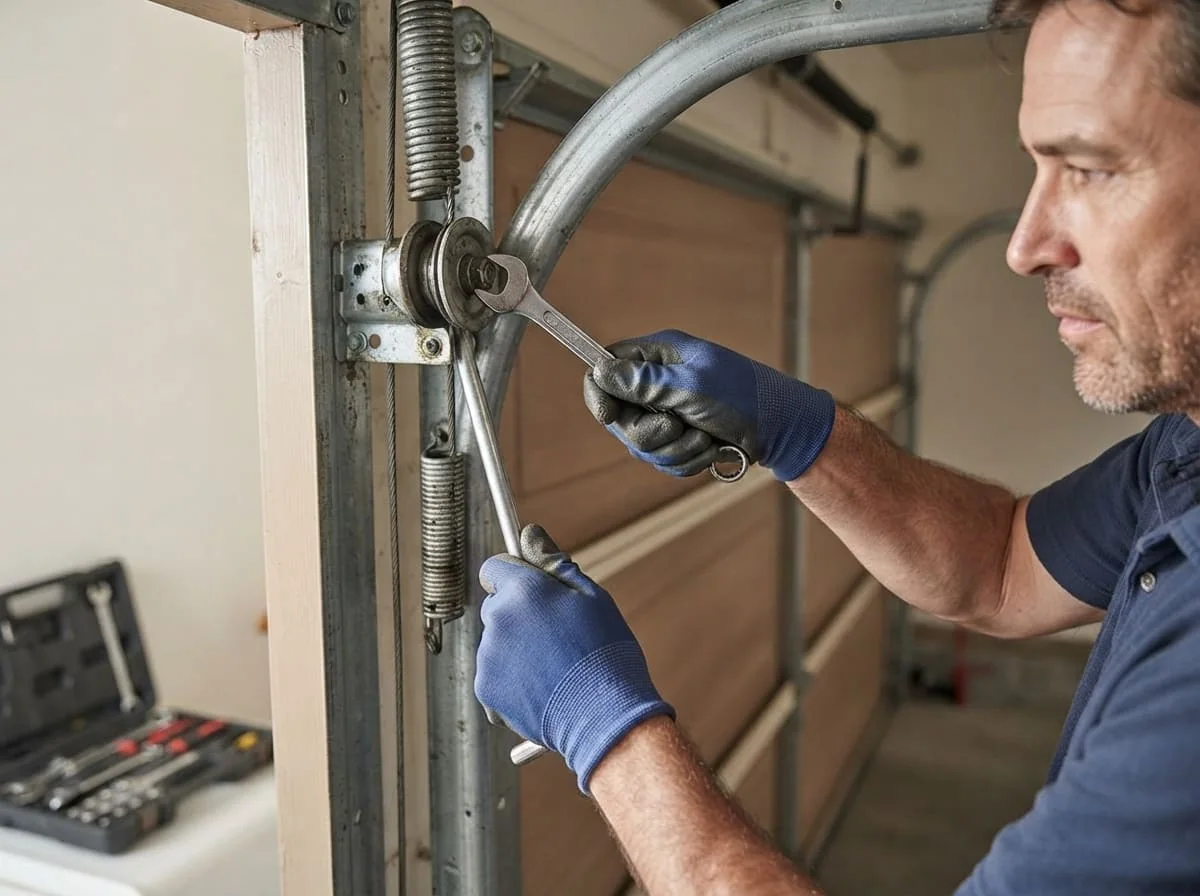
The Insulation Core: A Hidden Factor
Most sectional garage doors built in the last couple of decades aren't solid steel or aluminum — they're a sandwich construction with a steel or aluminum skin on the outside, a rigid foam insulation core (polystyrene or polyurethane) in the middle, and often a second interior skin. That construction is great for R-value and for quieting the door down, but it changes the repair calculus when a panel gets damaged.
A puncture, a deep crack, or sustained water intrusion doesn't just mark the surface skin — it can compromise the foam core underneath. Water that gets into a cracked panel and freezes during a Joliet winter can expand and delaminate the layers, or leave the core waterlogged and less effective at insulating even if the outer skin still looks presentable. This is a case where the damage you can see is smaller than the damage you can't. A technician checking a water-damaged panel will typically press along the surface away from the visible crack to feel for soft spots, sponginess, or delamination, because that tells you whether the problem is contained to one section or whether moisture has been working its way further than the eye can tell. If you're deciding between insulated options for a future door, our guide to insulated garage doors and Illinois winters covers what R-value actually buys you here.
Safety First: Balance, Tracks, and Spring Load
This is the part homeowners least expect, and it's the part Danny is most insistent about. A damaged panel isn't always just a cosmetic or a repair-cost question — sometimes it's a safety question.
A garage door is a balanced system. The torsion or extension springs are sized to counterbalance the door's total weight so the opener only has to do a small fraction of the lifting work. If a panel is bent, buckled, or has lost rigidity, it can change how the door sits in the tracks or shift where the weight load falls across the rollers and hinges. A door that no longer travels evenly can bind against the track, put uneven strain on the cables, or in worse cases pull a roller out of its track entirely while in motion. None of that is something you want to discover the hard way with a door hanging half-open.
Warning signs to take seriously alongside a damaged panel include: the door looking crooked or racked when partially open, a grinding or scraping sound that wasn't there before the damage occurred, visible daylight or a gap where the damaged section no longer meets its neighbor evenly, or the door reversing unexpectedly on the opener. Any of these means the door should be taken out of regular use until it's inspected — not because every damaged panel causes these problems, but because when they do show up together, the springs and cables are absorbing stress they weren't sized for, and that combination is exactly how the U.S. Consumer Product Safety Commission's garage door safety guidance describes the conditions that lead to serious injuries. If your door is already showing signs of coming off track, our off-track garage door repair page and track repair page cover what that looks like and what's involved in correcting it. Never try to force a misaligned or racked door open or closed by hand, and never attempt to loosen or adjust a torsion spring yourself — that's genuinely dangerous work that belongs to a trained technician.
Why Panel Age Affects Availability
Beyond color matching, there's a straightforward supply issue with older doors. Garage door manufacturers, like most building product makers, retool their panel dies and profiles periodically. A specific panel width, rib pattern, or window configuration that was standard ten or fifteen years ago may no longer be produced by that manufacturer at all, and if the original installer or brand isn't identifiable from any surviving paperwork or embossed markings, sourcing an exact match panel can take real time — sometimes longer than most homeowners expect for what looks like a simple repair.
This is one of the most common reasons a repair that sounds simple over the phone turns into a longer conversation once a technician is actually looking at the door. It isn't evasiveness — it's that panel availability genuinely varies by brand, age, and whether the manufacturer that built your specific door is still in business or still making that model line. A technician who's been doing this in Joliet for over a decade can usually recognize common door brands and eras on sight, which speeds up the sourcing question, but it's still something that has to be confirmed rather than assumed.
What to Expect When a Technician Looks at Your Door
Everything above is a framework, not a substitute for someone actually standing in front of your door. Photos help, and describing the damage over the phone helps narrow things down, but panel repair decisions genuinely depend on details that are hard to convey any other way: how the panel feels when pressed, whether the door still travels true in the tracks, whether the springs are carrying the load correctly, and how close a sourced replacement panel would realistically look next to the existing sections.
When Danny or one of his technicians comes out for a panel repair, the visit typically includes checking the door's balance (does it stay put when disconnected from the opener partway up), inspecting the tracks for binding or misalignment near the damaged section, checking the springs and cables for any signs of added stress, and assessing whether the insulation core is compromised beyond the visible surface. Only after that full picture is honest advice possible — whether that's a straightforward panel swap, a recommendation to consider the whole door, or something in between.
We provide upfront, honest pricing and a free quote before any work begins, and we won't recommend a full-door replacement just because it's a bigger job — plenty of the panel repairs we do are exactly that: one panel, done well, and the homeowner's back to normal in a single visit. If you're not sure which category your damage falls into, that's a normal question to have, and it's exactly what the in-person assessment is for. You can see the details of that service on our panel replacement page, or reach out through our contact page to get a technician out to look at it.

Danny Kowalski
Owner and lead technician at Joliet Garage Door Repair Solutions, serving Joliet, IL since 2015.
FAQs
Can I replace just one garage door panel myself?
It depends on the door and the damage, but this isn't a typical DIY repair we'd recommend without experience. Panels are fastened to their neighbors and to the hinges and rollers that carry the door's weight, and getting the alignment even slightly wrong can throw off how the door travels or how the springs carry the load. If the damage is purely cosmetic and shallow, some homeowners do handle minor touch-up work themselves. Anything involving a structurally deformed panel, a door that's off-balance, or work anywhere near the torsion spring should be left to a trained technician.
How do I know if my panel damage is cosmetic or structural?
Sight down the length of the damaged panel with the door closed. If it sits flush and flat with the panels next to it, the damage is likely cosmetic. If you see a bow, a twist, or a gap where it no longer meets its neighbor evenly, or if the door is making new noises or seeming to bind since the damage happened, treat it as structural and have it looked at before using the door regularly.
Will a replacement panel match the rest of my door?
Sometimes, and sometimes not. Newer doors with a common profile and color usually match well. Older doors are the tricky case — manufacturers change panel profiles, embossing patterns, and colors over the years, and sun exposure fades existing panels unevenly, so even a same-brand replacement panel can look noticeably different once it's installed next to weathered sections. This is one of the biggest reasons homeowners with older doors end up choosing full-door replacement instead.
Is a dented panel dangerous, or just cosmetic?
A shallow, purely cosmetic dent generally isn't a safety issue on its own. It becomes a concern when the panel is bent or buckled enough to change how the door sits in the tracks, because that can put uneven stress on the springs, cables, and rollers. Signs worth taking seriously include the door looking crooked when partway open, new grinding or scraping sounds, or the door reversing unexpectedly. If you notice any of those alongside the damage, stop using the door and have it inspected.
How much does panel repair or replacement cost?
It depends on factors like whether the damage is limited to one panel or several, whether a matching panel is still available for your door's brand and age, whether the insulation core is affected, and whether the springs, cables, or tracks need attention because of the damage. We don't publish estimated figures because they vary too much door to door to be honest. We do provide a free, upfront quote after a technician has actually looked at the damage, so you know exactly what you're paying for before any work starts.
How long does a single-panel replacement take?
A straightforward swap on a door with a readily available matching panel is usually a same-visit repair once the part is on hand. The bigger variable is sourcing: if your door is an older or less common model, tracking down a matching panel can add time before the physical repair itself, which typically only takes a couple of hours.
Have a Garage Door Problem Right Now?
Skip the guesswork — call Joliet Garage Door Repair Solutions for a fast, honest diagnosis.