
How to Read a Garage Door Repair Quote
A breakdown of what a legitimate garage door repair quote should actually contain, the pricing tactics to watch for, and the questions worth asking before you let anyone start work.
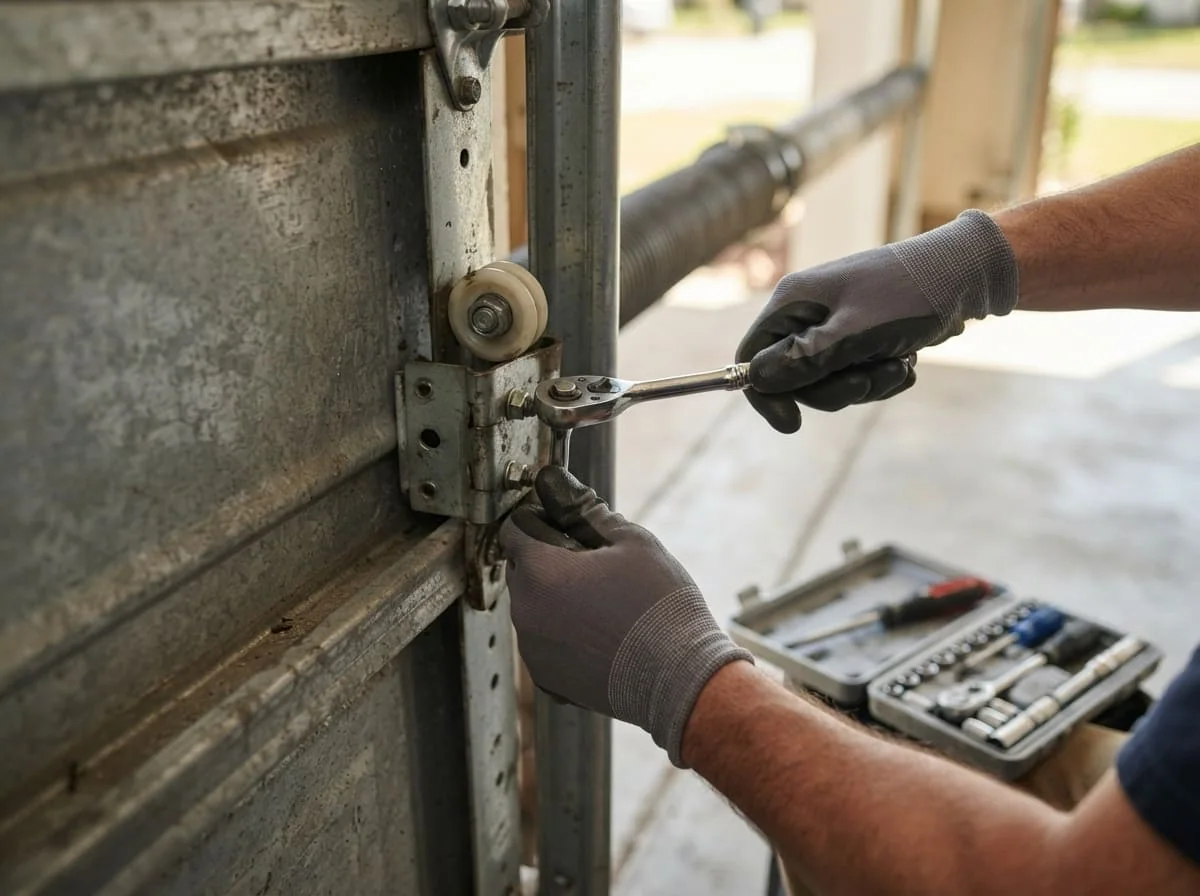
What a Legitimate Quote Should Include
Most homeowners only think about how a garage door repair quote is put together after something has already gone wrong — usually while standing in the driveway with a technician they've never met, trying to decide whether a number sounds reasonable. That's a bad time to be learning the basics. A legitimate quote, given before any repair work starts, should be written down rather than just spoken, and it should be itemized rather than presented as one lump figure.
At minimum, a proper quote lays out the specific problem the technician found (not just a vague symptom like "door won't close"), the exact parts needed to fix it, the labor required to do that work, and any separate charge tied to scheduling — for example, if you've asked for the same day or outside normal business hours. Each of those should be its own line, not folded together so you can't tell what you're actually paying for.
None of this is complicated, and none of it requires special knowledge on your part. It just requires the company to write it down before touching the door, and it requires you to ask if they don't offer that automatically.
Diagnostic and Service Call Fees, Explained
Almost every legitimate garage door company charges something to send a technician to your house and diagnose the problem. That's a real cost — a truck, fuel, and a trained person's time spent figuring out what actually failed, whether that's a broken torsion spring, a frayed cable, a worn roller, or an opener logic board that's stopped communicating with the wall panel. Being asked to cover that visit is normal and not, by itself, a warning sign.
What matters is how that fee is handled and whether it's disclosed before the technician is standing at your door. Ask two things when you first call: does the diagnostic or service call charge get applied toward the repair if you go ahead with the work, and is it still charged if you decide not to proceed once you see the quote? A company that gives you a straight answer to both questions, before a truck is dispatched, is treating that fee as a normal part of doing business rather than as leverage to pressure you into saying yes on the spot.
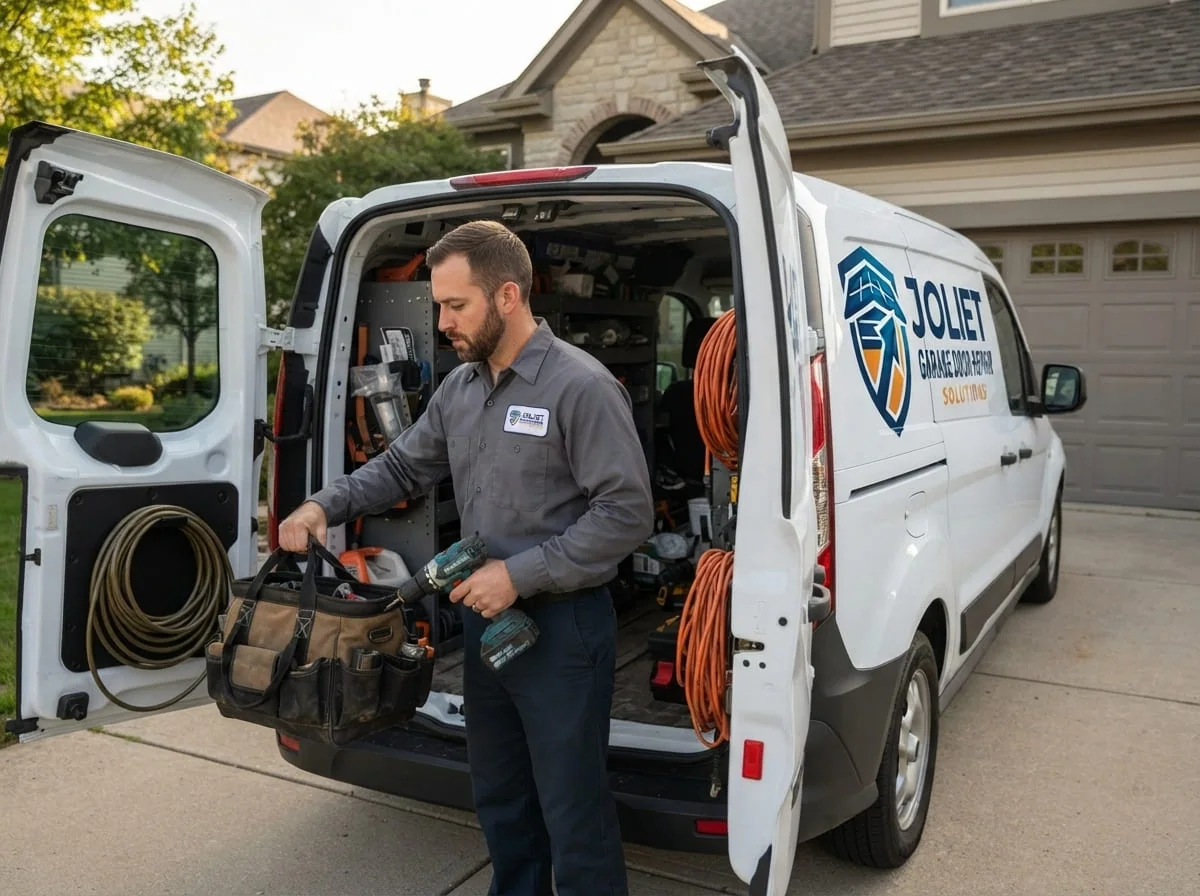
Parts and Labor: Two Separate Line Items
On a proper quote, parts and labor are listed separately, not combined into a single unexplained total. The parts line should be specific — "torsion springs, matched pair" rather than just "springs" — so you know exactly what's being replaced and why.
Torsion springs are a good example of where specificity matters. Most residential garage doors built in the last few decades use a torsion spring system rather than the older extension spring style, and torsion springs are rated for a certain number of open-and-close cycles rather than a calendar lifespan — a standard referenced in DASMA's technical data and ANSI/DASMA 102. When one spring on a two-spring system breaks, a reputable technician will typically recommend replacing both, even if only one has failed. That's not an upsell. Both springs have been cycling the same number of times since they were installed, and the surviving spring is usually close behind the one that just gave out. Replacing only the broken one means the older spring is now doing more work than it was built to handle at that stage of its life, and it often fails again within months, sometimes while lifting a heavier load than usual. A quote that explains this reasoning, in writing, is doing its job. A quote that just lists "springs" with no explanation is not.
Labor, listed separately, reflects the technician's time actually doing the repair — distinct from the diagnostic fee that got them there in the first place.
Red Flag: The Bait-and-Switch Quote
This is the complaint homeowners bring up most often when they've had a bad experience: a company quotes an unusually low number over the phone to get a truck in the driveway, then the technician arrives, looks at the door for a few minutes, and announces the situation is much worse than described — and much more expensive.
To be fair, a phone estimate can never be fully accurate. Springs, cables, and openers genuinely can't be assessed with precision until someone is standing in front of the door, and any honest company will tell you upfront that a phone quote is preliminary, not final. The difference between that honest caveat and a bait-and-switch is what happens next. A legitimate technician who finds something different than expected will explain specifically what changed, show you the part in question if it's practical to do so, and put the revised number in writing before doing anything further. A bait-and-switch operation is counting on the fact that you're now standing there with a torsion spring in pieces or a technician already mid-job, and that you'll feel stuck enough to agree to almost anything rather than start over with someone else.
If a quote changes substantially once someone is in your garage, that alone isn't proof of dishonesty. But you're entitled to a clear explanation of why, in writing, before you agree to pay it — and you're entitled to say no and get a second opinion if that explanation doesn't add up.
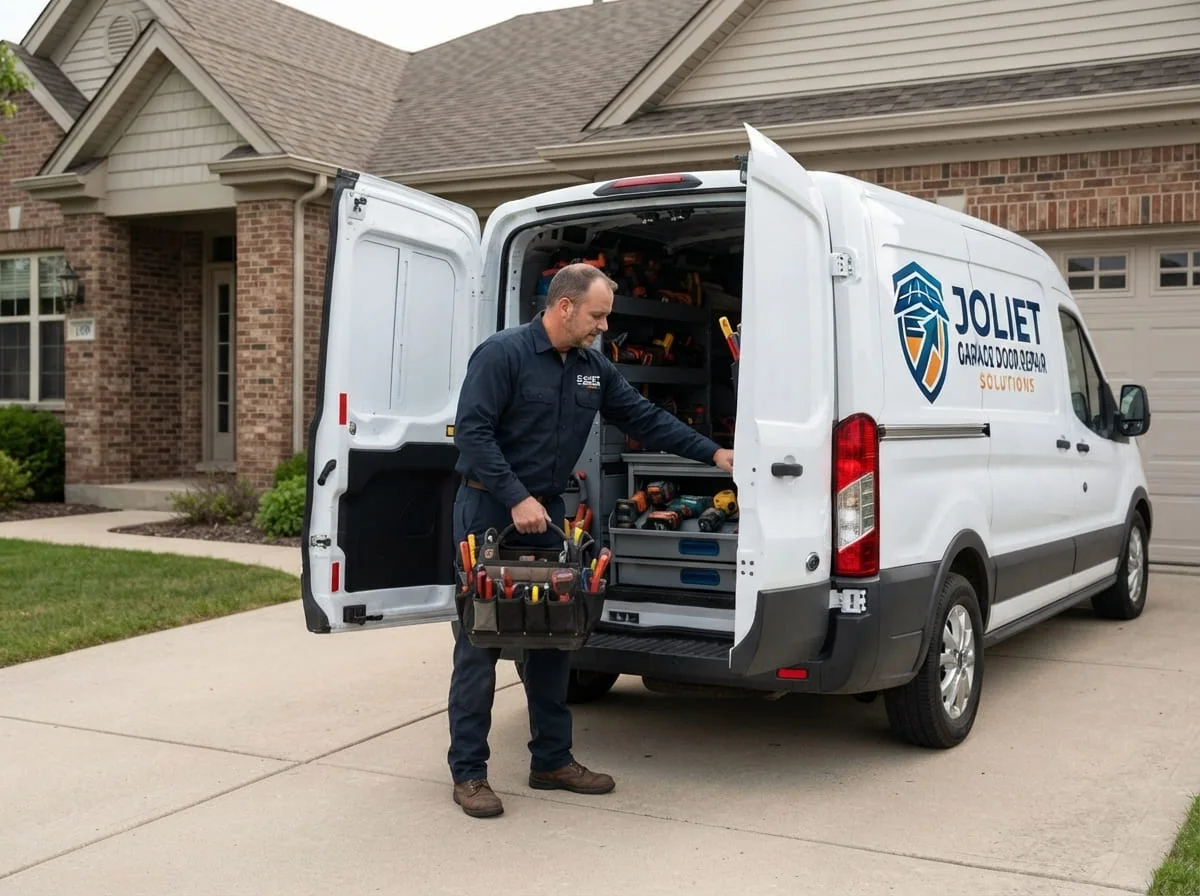
Red Flag: High-Pressure, Same-Visit Upsells
A second pattern worth watching for is the technician who arrives to fix one specific problem and leaves with a much longer list of "recommended" repairs — all of which need to be decided on immediately, often with a discount that supposedly disappears if you don't sign today.
Genuine additional issues do turn up during an honest inspection. A technician replacing a broken spring might reasonably notice a frayed cable, a cracked roller, or a bent track section while the door is apart — and pointing that out is part of doing the job well, not a sales tactic. The distinction is in how it's presented. A trustworthy technician explains what they found, why it matters, and gives you a written recommendation you can think over, get a second opinion on, or schedule for a later date. A pressure-tactic upsell relies on urgency: "today only" pricing, a refusal to put the additional recommendation in writing, or language suggesting the door isn't safe to use if you don't act immediately, even when that isn't accurate.
- Ask for anything beyond the original repair in writing, with a clear explanation of what was found.
- Treat any discount tied to deciding "right now" with skepticism — a fair price shouldn't depend on how fast you agree to it.
- You're allowed to say "send me that in writing and I'll decide" even with a technician standing in your garage.
Why Written Itemization Actually Matters
A written, itemized quote isn't a formality. It's the thing that lets you compare one company's pricing structure to another's, hold a company to what they told you before work started, and catch scope creep before you're billed for it rather than after. Without it, you're relying entirely on memory and trust in a conversation that happened standing in your driveway, possibly with a broken spring or a door stuck halfway open adding pressure to just get it over with.
This is also where invented numbers cause real harm. A company that tells you a figure over the phone with no intention of honoring it in writing isn't really quoting you — they're managing your expectations until they're inside your garage. A legitimate quote should hold up on paper exactly as it was described verbally, and any changes should come with a specific, written reason.
Questions to Ask Before You Say Yes
Before agreeing to any repair, it's worth asking a short list of direct questions. A company confident in its pricing will answer all of them without hesitation.
- What exactly is broken, and how did you determine that?
- Can I get this quote in writing, with parts and labor listed separately, before you begin?
- Does the diagnostic or service call fee apply toward the repair cost?
- Under what circumstances would this price change once you start the work?
- Are there other issues you'd recommend addressing, and can I decide on those separately from today's repair?
- Is there an additional charge for same-day or after-hours scheduling, and is that included in this quote?
- If I need a second opinion, is that a problem?
If a technician is reluctant to answer any of these plainly, that hesitation is itself useful information.
What Actually Drives Garage Door Repair Costs
Without naming figures, it's worth understanding the real factors that make one repair more involved than another, so a quote makes sense structurally even before you compare it to anyone else's.
Which component failed matters most. A single broken torsion spring is a different job than a snapped cable, which is different again from a bent track, a damaged panel, or an opener that needs its logic board or drive mechanism replaced. Whether the system uses torsion springs or the older extension-spring style matters too — they have different safety requirements, and extension springs generally need containment cables running through them per CPSC safety guidance, which extension-spring repairs should always include if they aren't already present. Whether one spring needs replacing or the matched pair, the accessibility of the opener or spring assembly in your particular garage, and whether the original failure caused secondary damage — a spring that snapped and let the door drop hard enough to jump the track, for instance — all affect the scope of the job.
Local climate plays a real role here too. Joliet winters bring stretches of cold that regularly sit in the teens and twenties, and cold weather makes steel torsion springs contract, which increases stress on a spring that's already worn down from years of cycling. That's a large part of why so many spring failures happen in January and February rather than July. Cold also makes nylon rollers brittle and thickens the grease in track and opener components, which is why a door that's been sluggish or noisy for months sometimes finally fails during the first hard freeze of the season. None of that changes what a fair quote looks like structurally — it just explains why the same repair can look different depending on the age and condition of the door in front of the technician.
How Joliet Garage Door Repair Solutions Handles Quotes
Danny Kowalski, who has run Joliet Garage Door Repair Solutions since 2015, is direct about why this matters to him. Early in his career, working as a technician for a regional overhead door company, he watched a coworker get seriously hurt when an extension spring let go during a rushed repair. That day changed how he approaches every spring and cable job, and it's also shaped how he thinks about quoting: rushing a homeowner into a decision, or glossing over what a repair actually involves, runs against the same instinct that tells him to slow down around a loaded spring.
That's why every quote from Joliet Garage Door Repair Solutions is free, upfront, and given in writing before any work begins — parts and labor listed separately, with a plain explanation of what was found and why a given repair is being recommended. No invented figures, no pressure to decide before you're ready, and no problem if you'd like to think it over or get a second opinion first. If you're trying to make sense of a quote you've already received from another company, or you'd rather start from scratch with someone local, reach out and we'll walk through it with you.

Danny Kowalski
Owner and lead technician at Joliet Garage Door Repair Solutions, serving Joliet, IL since 2015.
FAQs
Is it normal for a garage door repair quote to change once the technician arrives?
A phone estimate is always preliminary, since springs, cables, and openers can't be fully assessed without an in-person look. It becomes a problem only if the revised price isn't explained clearly and put in writing before work continues. A legitimate company will tell you specifically what changed; a bait-and-switch operation will just ask you to trust a bigger number.
Should I get more than one quote before agreeing to a spring repair?
It's a reasonable step, especially for a repair you're not in a rush on. A second opinion costs you a little time but can confirm whether a recommendation (like replacing both springs in a pair rather than just one) is standard practice or something specific to how that company prices jobs. A company that discourages you from getting a second opinion is worth being cautious about.
Can I fix a garage door problem myself to avoid getting a quote at all?
Some basic maintenance, like clearing debris from tracks or checking that safety sensors are aligned, is reasonable for a homeowner to handle. Torsion spring, cable, and extension spring work is different: these components are under significant tension and have caused serious injuries, which is part of why CPSC safety guidance treats spring systems as a professional repair, not a do-it-yourself project.
How much should a garage door repair cost?
There's no single honest number to give here, since cost depends on which component failed, whether one part or a matched pair needs replacing, how accessible the system is, and whether the original failure caused secondary damage. What you should expect, regardless of the specifics, is a free, itemized, written quote before any work begins, which is exactly how Joliet Garage Door Repair Solutions prices every job.
What should I do if a company won't give me a written quote?
Ask directly, and if they still won't provide one before starting work, treat that as a reason to call someone else. A written, itemized quote costs a company nothing to provide and protects you from a price changing without explanation once the job is underway.
Is an unusually low quote always a red flag?
Not necessarily, but it's worth asking follow-up questions rather than assuming it's simply a good deal. Ask whether the number includes both parts and labor, whether it assumes a single spring or a matched pair where relevant, and whether it's written and guaranteed not to change without a specific, disclosed reason.
Have a Garage Door Problem Right Now?
Skip the guesswork — call Joliet Garage Door Repair Solutions for a fast, honest diagnosis.